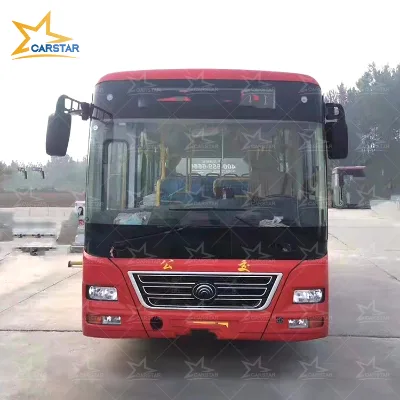
Source Single Deck Used City Bus for Transit, School, and Coach
Find 19 single deck used city bus listings with diesel engines and varying seat capacities from 30 to 60. Compare specifications like power, torque, and dimensions to select the right vehicle for transit, school, or coach applications.
Key considerations
Products List


$35625.00 - $35689.00
Moq: 1
Comprehensive Sourcing Guide
Single Deck Used City Bus Sourcing Guide
Procuring a single deck used city bus requires a disciplined approach to evaluating vehicle history, mechanical integrity, and regulatory compliance. These vehicles serve as critical assets for municipal transit, school transportation, and private coach services, offering a cost-effective alternative to new acquisitions while meeting specific capacity and operational needs. Buyers must navigate a market where condition reports vary significantly, making rigorous verification of maintenance records and physical inspections essential to avoid costly post-purchase failures.
The sourcing process involves balancing initial acquisition costs against long-term operational expenses, including fuel consumption, maintenance frequency, and potential retrofitting requirements. Understanding the specific configuration of the bus, such as seating capacity, steering position, and emission standards, is vital for aligning the purchase with local regulatory environments and route requirements. This guide provides a structured framework for evaluating listings, verifying technical specifications, and ensuring commercial terms protect the buyer’s investment throughout the vehicle’s remaining service life.
Product Scope and Observed Listing Signals
The current market for single deck used city buses presents a diverse range of configurations, with observed listings indicating a price range between $4,399 and $36,488 USD. This wide variance reflects differences in vehicle age, mileage, brand reputation, and overall mechanical condition. Buyers should note that the minimum order quantity (MOQ) for these transactions is typically one unit, allowing for flexible procurement strategies whether for immediate fleet replacement or gradual expansion. The observed data suggests that pricing is heavily influenced by specific attributes such as engine power, seating capacity, and the presence of advanced features like integral power steering or specific emission standards.
Listings frequently highlight key operational attributes, including fuel type, which is predominantly diesel in the observed data, and structural design, which is consistently single-deck. Seating capacities vary significantly across listings, ranging from 30 to over 60 seats, catering to different operational scales from compact urban routes to high-capacity commuter lines. Some listings specify low-floor designs, which are crucial for accessibility compliance and efficient passenger boarding, while others may indicate standard step-entry configurations. Buyers must carefully cross-reference these observed signals with their specific operational requirements to ensure the selected bus aligns with their service model.
Technical Specifications to Verify
Verifying the technical specifications of a used bus is paramount to ensuring operational reliability and safety. Key parameters to inspect include the engine’s maximum power and torque, which directly impact performance on varied terrains and load conditions. Observed listings show power outputs ranging from 96kw to 191kw, with torque figures varying accordingly. Buyers should request detailed engine logs and maintenance records to confirm that the powertrain has been well-maintained and that the stated specifications match the actual installed equipment. Discrepancies between listed and actual performance can lead to unexpected operational inefficiencies and increased fuel costs.
Transmission type and steering configuration are also critical technical factors that affect driver comfort and vehicle handling. Most observed listings indicate manual transmissions and integral power steering, which are standard for heavy-duty buses but require skilled operation. Steering position, whether right-hand drive (RHD) or left-hand drive (LHD), must match the local traffic regulations of the destination country. Additionally, the physical dimensions of the bus, including length, width, and height, should be verified against the buyer’s depot facilities and route constraints. Listings provide standard dimensions such as 10,490x2,450x3,330 mm or 12,000x2,550x3,600 mm, but physical inspection is necessary to confirm these measurements and check for any structural modifications or damage.
Compliance and Safety Documentation
Compliance with local and international emission standards is a non-negotiable aspect of sourcing used buses. Buyers must verify the emission standard of the vehicle, with observed listings mentioning Euro standards and specific engine capacities exceeding 8 liters. Ensuring that the bus meets the current emission regulations of the destination country is essential to avoid legal penalties and operational restrictions. Documentation such as emission test certificates and engine compliance reports should be requested and validated against local regulatory requirements before finalizing any purchase agreement.
Safety certifications and structural integrity documents are equally important for ensuring the bus is roadworthy. Listings may reference certifications such as ISOCCC, but buyers should verify the validity and scope of these certifications with the issuing bodies. The condition of the bus, explicitly stated as "Used" in most listings, requires a thorough inspection of the chassis, bodywork, and braking systems. Buyers should insist on a comprehensive safety inspection report that covers critical components like tires, lights, and emergency exits. Additionally, verifying the vehicle’s identification number (VIN) and ownership history can help uncover any past accidents or liens that might affect the transfer of title.
Cost Drivers and Commercial Terms
The total cost of ownership for a used city bus extends beyond the initial purchase price, encompassing transportation, customs duties, and immediate maintenance needs. The observed price range of $4,399 to $36,488 USD suggests that buyers can find options at various budget levels, but the lowest prices may correspond to vehicles requiring significant repairs or upgrades. Buyers should budget for post-purchase inspections, necessary part replacements, and any required modifications to meet local standards. Understanding the full cost structure helps in making informed decisions and avoiding unexpected financial burdens after the acquisition.
Commercial terms, including payment methods, delivery schedules, and warranty provisions, play a crucial role in mitigating procurement risks. Buyers should negotiate clear terms regarding the condition of the bus at the time of delivery and the responsibilities for any damages incurred during transit. It is advisable to use secure payment methods and consider escrow services for high-value transactions. Additionally, buyers should clarify the lead times for vehicle preparation and shipping, as delays can impact operational planning. Establishing a detailed contract that outlines these terms ensures both parties have a clear understanding of their obligations and reduces the potential for disputes.
Supplier Qualification and Quality Control
Selecting a reliable supplier is critical to ensuring a smooth procurement process and receiving a vehicle that meets the agreed-upon specifications. Buyers should conduct due diligence on potential suppliers by verifying their business credentials, past transaction history, and customer reviews. Suppliers with a proven track record in exporting used buses are more likely to provide accurate listings and reliable support throughout the transaction. It is also important to assess the supplier’s ability to provide comprehensive documentation and assist with logistics and customs clearance.
Quality control measures should be implemented at various stages of the procurement process, from initial listing review to final delivery. Buyers should request detailed photographs and videos of the bus, focusing on key areas such as the engine compartment, interior seating, and exterior bodywork. If possible, conducting a physical inspection or hiring a third-party inspection service can provide valuable insights into the vehicle’s condition. Establishing clear quality standards and inspection criteria before placing an order helps in setting expectations and ensuring that the delivered bus meets the buyer’s requirements.
Long-Term Procurement Checks
Long-term success in sourcing used city buses depends on establishing ongoing relationships with suppliers and implementing continuous improvement processes. Buyers should maintain open communication with suppliers to address any post-delivery issues and gather feedback on the vehicle’s performance. Regularly reviewing the condition and performance of the acquired buses can help identify common issues and inform future purchasing decisions. Building a network of trusted suppliers and staying informed about market trends can enhance the buyer’s ability to secure high-quality vehicles at competitive prices.
Implementing a systematic approach to vehicle maintenance and lifecycle management is essential for maximizing the value of the procurement investment. Buyers should develop a maintenance schedule that aligns with the manufacturer’s recommendations and the specific usage patterns of the buses. Tracking key performance indicators such as fuel efficiency, maintenance costs, and downtime can provide valuable data for evaluating the overall effectiveness of the procurement strategy. By continuously monitoring and adjusting their approach, buyers can ensure that their fleet of used city buses remains reliable, efficient, and compliant with regulatory standards over the long term.
FAQs
What is the typical seat capacity for a single deck used city bus?
Seat capacity varies by model, ranging from 30 to 60 passengers. Specific configurations include 31 seats for large buses, 35 for medium sizes, and up to 50-60 for high-density layouts. Buyers should verify the exact seating arrangement against their operational needs before procurement.
Can a single deck used city bus operate on diesel fuel?
Yes, diesel is the standard fuel type for these vehicles. Most units are equipped with Euro-compliant engines and capacities exceeding 8 liters. This ensures reliable performance and compliance with common emission standards for urban and intercity transport operations.
What is the maximum power output for these used buses?
Maximum power outputs range from 96kw to 191kw depending on the specific model. Higher performance units may reach 180kw or 191kw, while smaller variants offer 153kw or 96kw. Selecting the appropriate power level is crucial for matching route gradients and load requirements.
Which certifications are commonly associated with single deck used city buses?
ISO certifications are frequently documented for these vehicles, including ISOCCC and general ISO standards. These credentials indicate adherence to quality management systems. Buyers should request valid certification documents to verify the vehicle's compliance history and manufacturing standards during the sourcing process.
What are the standard dimensions for a single deck used city bus?
Standard dimensions typically measure around 10-12 meters in length, 2.45-2.55 meters in width, and 3.3-3.6 meters in height. Specific models may vary, such as 10490x2450x3330mm or 12000x2550x3600mm. Accurate sizing is essential for garage compatibility and route clearance planning.
How does the steering configuration affect single deck used city bus operations?
Steering positions are available in both Right-Hand Drive (RHD) and Left-Hand Drive (LHD) configurations. Most units feature integral power steering for improved maneuverability. The choice depends on local traffic laws and driver preference, ensuring safe and efficient operation in the target market.